A locked gate and a working alarm are a good start, but they do not tell the whole story when it comes to factory security. An office window, a side door or an unlocked stockroom can still leave valuable equipment and materials vulnerable. Protecting factory premises means looking at the whole building and how your team uses it. Good security should fit comfortably into the working day and make it straightforward to leave the site secure when the last shift finishes.
Autumn is a good time to review your security, as the evenings get darker and staff settle back into their usual routines after the summer. Start by walking around the site with someone who regularly opens up or locks up. They will often know about problems that are easy to miss, such as a lock that sticks, a window that does not close properly or a delivery door that is regularly left unattended. Ask what makes securing the building difficult and where a small improvement could help.
Begin outside. Police.uk’s advice on preventing business burglaries recommends checking vulnerable entrances, securing service doors and providing suitable lighting, particularly around loading areas. Look for places where someone could approach the building without being seen. Parked trailers, stacked materials and overgrown shrubs can all hide a door or window from view. Write down anything that needs fixing, then agree who will deal with it and when. A broken light or damaged lock should not still be on the list at your next security check.
Different parts of the factory will need different protection. A loading bay must allow vehicles and deliveries through, while a staff entrance needs to remain convenient for people arriving and leaving throughout the day. Office windows bring in daylight and help make the workplace pleasant. Rather than choosing the same security measure for every part of the building, consider how each door and window is used. This makes it easier to choose protection that works for both the premises and the people working there.
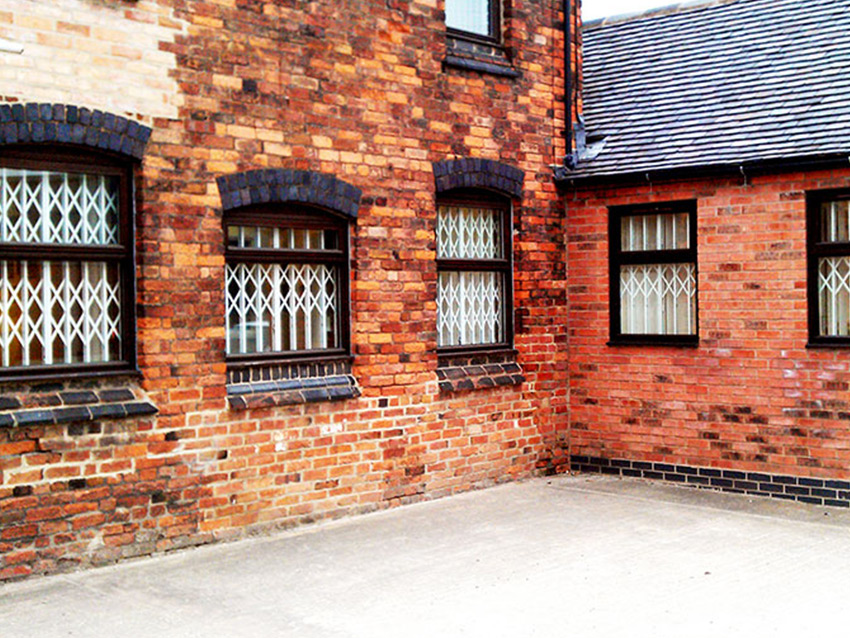
Ground-floor windows in offices, reception areas and stockrooms are worth a close look. Safeguard’s window security grilles add a physical barrier while allowing light through. Their retractable design means they can be folded back when not needed. When planning where to fit them, allow space for the folded grille and check that window handles, blinds and nearby furniture will not get in the way. You can enter your measurements in the online shop to get an instant quote, with the Safeguard team checking the details before manufacture.
Side doors and staff entrances deserve the same attention. Door security grilles can provide additional protection for suitable entrances, but it is important to consider how they will be used. Will staff need to pass through regularly? Is the doorway used for moving equipment or receiving deliveries? Where will the grille sit when folded back? Working through these questions before ordering helps you choose a practical arrangement. Loading bay doors will need their own security checks, as will any damaged frames, walls or existing locks.
Security must also work alongside your fire safety arrangements. Government guidance on evacuation planning says escape routes should be clear and emergency doors should open easily. Before fitting a grille across a door or window used for emergency escape, ask the person responsible for your fire risk assessment to check the proposal. A grille being retractable does not, by itself, make it suitable for an escape route. Staff must be able to leave the building safely in an emergency.
It is also worth thinking about what someone could reach once inside the factory. Are portable tools left near a shared entrance? Can visitors walk straight into an area containing valuable stock? Are important documents stored in an unlocked office? Not every area needs the same level of access. Keeping valuable items in secure storage and making it clear which areas are for authorised staff can help protect them without making everyday work more difficult. Talk to the people using these spaces before making changes so the arrangements are practical.
Alarms and CCTV remain useful parts of factory security, alongside locks and physical barriers. Check that your alarm company has the correct contact details for the people who hold keys, and make sure everyone understands what happens if the alarm goes off. Review camera views too, especially if machinery, shelving or stock has been moved. A camera may still be working perfectly while its view of an important entrance is partly blocked. These simple checks help you get more value from the equipment already installed.
A clear locking-up routine brings everything together. Staff should know which doors and windows to check, who sets the alarm and who to tell if something is wrong. Keep the instructions short and easy to follow across every shift. If a lock becomes difficult to use or a grille needs attention, arrange for it to be checked rather than relying on a temporary fix. When employees or contractors leave, review their keys and access permissions. Regular checks are easier to maintain when they form part of the factory’s normal routine.
If you are reviewing protection for factory offices, windows or staff entrances, explore Safeguard’s security grilles for offices and commercial premises. For pricing, choose the relevant product in the online shop and enter your measurements to get an instant quote. If you would like help deciding what will work best, you can also send photographs and approximate measurements to the team. Explain how the door or window is used and mention any emergency escape requirements, so these can be considered before you order.